How Older Adults Can Release Endorphins
Contents
An excellent way to feel happier is to release endorphins. So, what are endorphins? In layperson’s terms, endorphins are happy chemicals. Your central nervous system and pituitary gland release endorphins to help you feel pleasure and manage your stressors.
You may have read that endorphins are as effective as antidepressants, but the Harvard Health article behind that idea makes a narrower point. For some people, exercise works as well as antidepressants, though exercise alone isn’t enough for severe depression.
If you take an antidepressant, don’t stop it without talking to your prescriber. Let’s look at some activities for older adults that can stimulate endorphins:
#1 Exercise
Exercise is the most obvious way to release endorphins. Harvard Health notes that high-intensity exercise releases endorphins, while steady low-intensity activity brings longer-term mood benefits. Older adults who are hesitant about engaging in physical activities can try lighter exercises like walking, light running, swimming, or bowling.
Other benefits of exercise for older adults, according to the CDC’s guide to activity benefits for adults 65 and older, include:
- Lower risk of heart disease, stroke and type 2 diabetes
- Less anxiety and a lower risk of depression
- Better balance and a lower risk of falls
- Lower risk of dementia
If you have a chronic health condition, check with your doctor before starting a new exercise routine.
Another advantage of exercise is that it can help older adults socialize and avoid isolation. Exercising in groups is an excellent way to create memories and cement relationships.
Walking with friends, bowling in a group, or joining a retirement community promoting active living are good options.
#2 Dancing
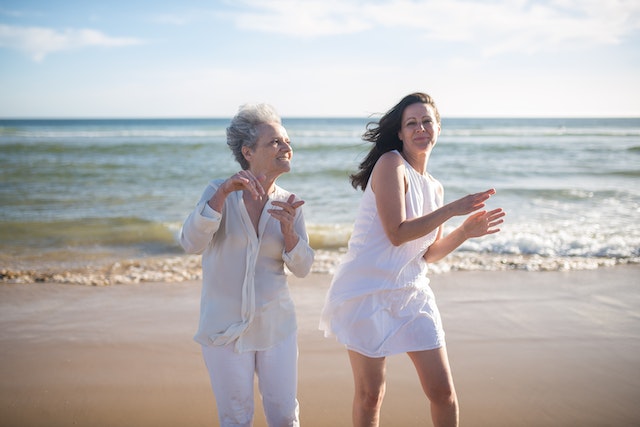
Experts suggest dancing as one of the tips for seniors to stay active for a good reason. The activity combines physical, emotional, and cognitive stimulation. It’s good for your brain, heart, and spirit.
The activity can also release endorphins in older adults. Many people feel a lift in mood after dancing, and dancing with others adds social connection, which also supports mood. Just remember to enjoy yourself and pay attention to your body’s strengths and limitations during the activity.
#3 Meditation
The activity may not seem like a likely candidate for endorphin release, but at least one study suggests that meditation triggers mood-improving chemicals. Evidence for broader benefits is mixed; for example, NCCIH says there is not enough evidence that mindfulness meditation helps insomnia.
#4 Physical Intimacy
Not only does physical intimacy strengthen relationships between older adults, but the experience can release endorphins and other mood-enhancing chemicals. It can also improve self-confidence and mental health and minimize stress.
#5 Comedy with Friends
As the saying goes, laughter is the best medicine. It can lift your mood and ease stress. It can also help older adults socialize, for example, in a comedy club with friends. Other ways to enjoy comedy with friends are to watch a funny movie together or just share humorous experiences.
Interestingly, small brain-imaging studies suggest that laughing together with friends may trigger the release of the body’s natural opioids, including endorphins. So, the next time your favourite entertainer is in town, call your friends and buy some tickets.
#6 Massage Therapy
Older adults visit massage therapists to reduce chronic pain, discomfort and fatigue, and stress. Many people find massage relaxing and mood-boosting, although research on how it changes body chemicals such as endorphins is limited.
Endorphins are powerful natural chemicals that benefit people from any age bracket, including older adults. While exercise is the most obvious way to boost endorphin levels, there are other effective methods, too, such as dancing, massage therapy, and a night of comedy. Try different ways to release endorphins in your body and enhance your mood.