The Complete Mattress Cleaning and Maintenance Guide
Contents
- Mattress Maintenance
- Regularly change your sheets
- Avoid excess sweating
- Vacuum your mattress
- Use a mattress protector
- Air your mattress
- Don’t make your bed right away
- Regular Mattress Cleaning
- Wash the sheets
- Vacuum the mattress
- Spot clean
- Sprinkle baking soda
- Protect the mattress
- Protect yourself
- Mattress Stain Removal
- Enzyme cleaner
- White vinegar
- Hydrogen peroxide
- When cleaning isn't enough
- Sources
If you really think about it, there are much worse things that can happen to your mattress than dust mites. What about sweat, urine, and blood? Or mold and mildew? Or worse – what if all that gets mixed up together? Not a pleasant topic, but surely an important one if you want to live in a healthy home.
A little-known fact is that mattresses can be easy to clean, as long as you take proper care of them. Looking for some tips on proper mattress maintenance and cleaning? Keep reading.

Mattress Maintenance
Regularly change your sheets
It’s best to change your sheets at least once a week. Clean bed linen is not only more comfortable to sleep in but also limits the dead skin that builds up in your mattress. Dust mites feed mainly on the tiny flakes of skin you shed, so less buildup means fewer mites. Change them even more often if you’re sick.
Avoid excess sweating
Sweating during sleep is normal, but if you wake up soaked most nights, it can become a problem for your mattress, as it will encourage the growth of mold and mildew. Take the necessary precautions to avoid it. You can wear different clothes, or get lighter sheets, and most importantly – adjust the temperature.
Vacuum your mattress
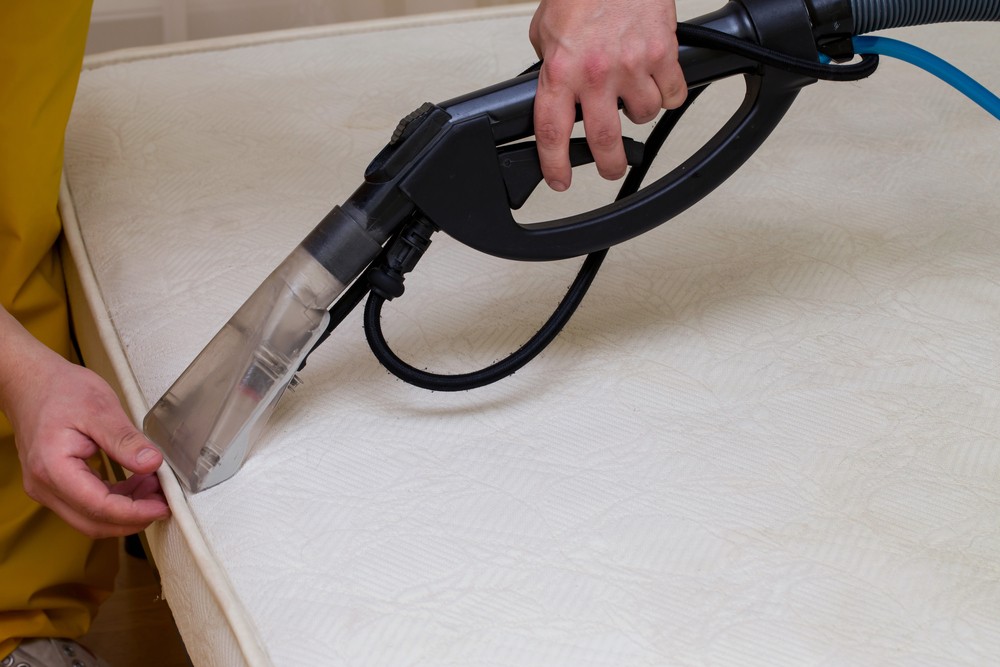
Regularly vacuuming your mattress is a vital part of maintenance. Use the upholstery attachment of your vacuum cleaner to clean the top and sides of your mattress and the bedspring. Use pressure to get all the dust and dirt out.
Use a mattress protector
And don’t wait for your mattress to wear out to get a mattress protector. Get one from the moment you get your mattress. A quality mattress cover will protect your mattress from spills and accidents and will also reduce the amount of dust and debris that makes it into your bed. Thus, it can prolong the lifespan of your mattress.
If you have dust mite allergies, choose an allergen-barrier cover that zips around the whole mattress.
Air your mattress
It’s a good idea to air your mattress once every few months. Fresh air and sunshine can help reduce odors and may lighten some stains. If you don’t have the right conditions to do so, you can stand it up near a sunny open window.
Don’t make your bed right away
Yes, every motivational video says that making your bed in the morning is a great way to start the day and will help you be much more productive. But don’t do it right away. Leaving the bed open for a while lets moisture from the night evaporate, and dust mites like humid conditions. Leave your bed undone while you’re getting ready for the day so it can air out.
Regular Mattress Cleaning
Wash the sheets
Remove pillows and bedding until your mattress is bare. Wash the bedding, and pillows if the care label allows. The Asthma and Allergy Foundation of America advises washing bedding in water that is at least 130°F to kill dust mites.
Vacuum the mattress
Use the upholstery attachment to go over the entire surface, including the sides and the bedspring. Use the crevice attachment for any hard-to-reach places that may have accumulated hidden dirt or dust.
Spot clean
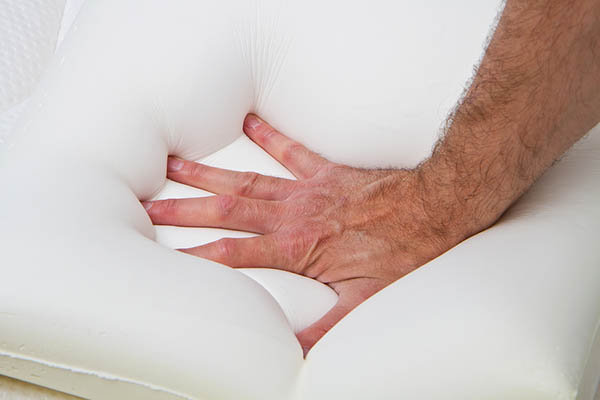
Memory foam is not supposed to get wet. So, don’t apply the solution directly onto the mattress or you risk having to dump it to trash. Use a soft cloth soaked in the solution and blot the stained area with it. After that, with a different cloth soaked in cold water, continue blotting until the blemish lifts. The type of stain remover you’re going to use depends on the dirt. More on that later.
Sprinkle baking soda
Sprinkle a generous amount of baking soda on the whole mattress and let it rest for a few hours. If possible, open a window and let the sunlight in. Baking soda helps absorb odors, and sunlight may help freshen the mattress. Many people leave the baking soda on for several hours for better results.
Once the baking soda works its magic, it’s time to thoroughly vacuum the mattress. Carefully remove any baking soda residue from the mattress. If you have a fabric headboard, now is a great time to vacuum that, too.
Now that one side of the mattress is clean, it’s time to get to the other one. If your mattress is two-sided, turn it over and repeat the previous steps. Many mattresses are one-sided, so check with the manufacturer. Rotating a mattress every few months can help it wear evenly.
Protect the mattress
Once your mattress is dry, cover it with a mattress protector. This will make cleaning much easier in the future. The protector will prevent spills, dust, and dirt from settling into the mattress. Also, it’s a good idea to use fitted sheets. They serve as an additional protective layer against dust.
Protect yourself
You don’t know what could be in your mattress. There might be dust mites, mold, mildew, dust, and bacteria. You’ll want to keep yourself protected from whatever elements that could be hiding there.
So when cleaning your mattress, it’s also important to keep yourself protected. Gloves may be the best kind of protection you can give yourself. A good choice is medical grade nitrile gloves, which are sturdy, latex-free and resist many cleaning agents.
Mattress Stain Removal
Enzyme cleaner
There are several types of stains that may appear on the surface of your mattress, but for biological stains, Fantastic cleaning experts advise to use an enzyme cleaner. Enzyme cleaners break down organic stains, but only if you give them enough time to work.
So, remember to wait for enough time to pass. Enzymes are great for stains like blood, sweat, and urine. For lighter stains, a DIY solution of water and mild dish soap often works.
White vinegar
A great all-natural solution for mattress stains can be white vinegar.
- Use a spray bottle to apply. Remember not to use the pouring method because it can over-saturate the mattress.
- Let it sit for about 15 minutes. If you have a ceiling fan, turn it on, or at least open the windows. Airflow speeds the process and removes the odor and the stain.
- Use paper towels or clean rags to soak up the vinegar and sprinkle baking soda generously all over the mattress. After a few hours, you’ll notice the baking soda caking as it soaks up the vinegar and removes both odor and the stain.
- Finally, vacuum up the baking soda.
Hydrogen peroxide
Hydrogen peroxide has bleaching properties that can reduce the appearance of stains on your mattress. That is why it can work on tough stains, but use it with caution, as it can discolor fabric.
Before you start, mix it with water and test it on a small section of the mattress. If it’s working well, spray it on the stain and allow it to soak for a few minutes. After that use a dry clean cloth to blot the excess. Don’t forget to put on protective gloves!
When cleaning isn't enough
If mold has spread into the mattress, it may be time to replace it. The EPA notes that absorbent materials may have to be thrown away if they become moldy, because mold can fill the spaces inside them.
Sources
- Dust Mite Allergy, Asthma and Allergy Foundation of America
- Mold Cleanup in Your Home, U.S. Environmental Protection Agency