5 Key Tips For Buying Foam Mattresses
Contents
Memory foam started in aviation. In 1966, an engineer working under a NASA contract developed "temper foam" to absorb shock in airplane seats and improve crash protection.
Over time, its use was transferred to consumer mattresses and pillows. As these products have risen in popularity, a lot of people now look to purchase them. Here’s a simple guide to help you make your next foam mattress purchase.
Flickr, Jim Forest
Do Your Research
The first tip we have to offer you is to do your research before going to the store. Before anything else, you should familiarize yourself with your sleep nuances.
For instance, know your sleeping position. Do you sleep on your side, on your back, or on your belly? Knowing this is important to determine which type of foam mattress you will eventually purchase.
You should also know how much you toss and turn as you sleep. You should also look at how much your partner does it if you sleep with one. Foam mattresses tend to absorb motion, so you may feel your partner’s movements less.
Also look at the age of your mattress. There’s no fixed replacement date, but a mattress that sags, has lumps, or leaves you waking up stiff is due for a change.
If your mattress is still in good shape, you may want to hold off. This increases your chances of getting the best bang for your buck in the future.
Meanwhile, if your mattress is worn out, try to find a replacement soon.
It’s also important to take note of the size of your bed frame. You wouldn’t want to go to all that trouble only to realize it’s not a fit. The height of the bed frame should also be considered because some foam mattresses are thick. This may add extra height and make it harder to get in and out of bed.
You should also read up on the different types of foam material available in these mattresses. Here is a list of common foam materials used in mattresses these days:
Traditional Memory Foam
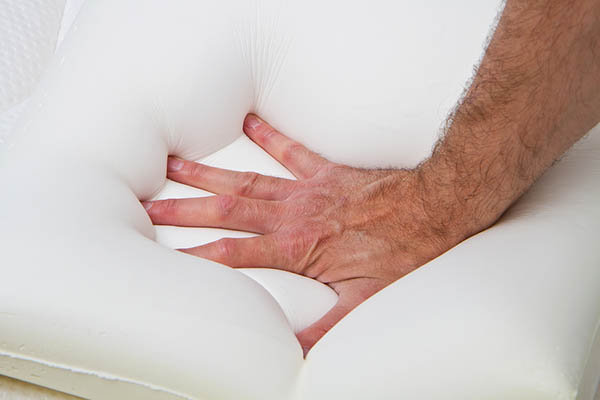
One of the first foam materials used for consumer mattresses. It reached the consumer market in the early 1990s and was designed to cradle the sleeper’s body and spread out pressure. However, this foam material has been known to trap heat.
Open Cell Memory Foam
This has a quicker response time compared to traditional foam materials. This means that there’s less of a “sinking in” feeling when you first lie down. Its open structure lets more air move through, so it may sleep a little cooler.
Gel Memory Foam
This is the newest among the bunch. Gel is added to help draw heat away from your body, though how much cooler it feels varies from product to product.
Different foam types also have different densities. Density is how much the foam weighs per cubic foot; it is not the same as thickness or firmness. Here’s how density tends to affect a mattress:
High density
Higher-density foam usually holds its shape the longest. It also tends to cost more and may feel warmer.
Medium density
This is a middle ground between durability and price. If you remain unsure about which density to get, this is probably the safest option available.
Low density
This type is easy to break in. This means that you’ll feel more comfortable sleeping on it earlier compared to other densities. However, low-density foam may not last as long as denser foam.

Pexels, bruce mars
Try Looking Online
Before going to the mattress store, you could also look at online catalogs. This significantly reduces the amount of time you spend having to search for potential purchases in-store. All you have to do is list down the name of the item and/or its identification number.
The staff at the store will then handle the rest for you. Another thing: do not be afraid to talk to the staff at mattress stores. They’re more than happy to help, and that’s what they’re there to do.
Try to look for sales and special discounts on the Internet if you can as well. There are cases where some products are on sale online, but not in physical stores.
Many manufacturers also offer reduced prices so you buy from them and not their competition. However, you should still make sure that you have buyer’s protection with these potential purchases.
Try Before You Buy
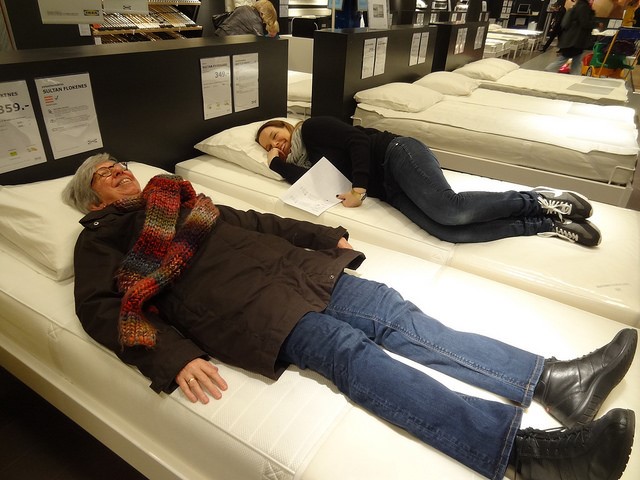
Once you reach the store and pick out some potential purchases, take them for a spin. Lie down on those mattresses for a good amount of time. Preferably, you should lie down on each for a minimum of 15 minutes. Try it out for longer if you can; there’s no need to feel self-conscious.
Here are a few things you should look for whilst lying down on a foam mattress:
1. Heat dispersion
A good foam mattress shouldn’t leave you overheated. Foam is not the best for hot sleepers, but good mattresses must have some heat dispersion.
2. Equally distributes weight and pressure points
You must feel that your weight is equally distributed across the mattress. The same goes for your body’s pressure points (back, neck, shoulders, hips, etc.). Even support can make lying down more comfortable for sore joints and muscles.
3. Comfort if you live with pain
A mattress isn’t a treatment, but the right one may help you sleep better if you have back pain, arthritis or fibromyalgia.
A review of mattress research found that medium-firm mattresses most often came out ahead for comfort, sleep quality and spinal alignment. If pain keeps you up at night, talk with your doctor.
If your potential choice ticks these boxes, then you’re on your way to a good purchase.

Pexels, Kaboompics .com
Read the Fine Print
Make sure to check the fine print on the mattress that you’re going to purchase. This includes the warranty, money back guarantees, and buyer’s protection, among other things. As much as possible, look for a foam mattress that comes with a home trial period. Since mattresses are such a large investment, you should get the chance to try it first.
Look for a mattress with a reasonably long warranty, especially if you’re buying from a sale. In some cases, stores offer items with defects at a lower price with less warranty too. If the defect doesn’t bother you that much, by all means, go for it.
You may also choose to buy the mattress if the problem could be easily fixed. Like, how a little bit of discoloration can be covered up by some mattress covers.
Get Some Add-Ons
Before you leave the store, look at some add-ons that could improve your overall sleeping experience. For instance, try out a mattress topper, which would add some softness to your foam mattress. This would supposedly give you the feeling of “sleeping on a cloud” according to some people. Also consider mattress covers and bed sheets, especially those that are hypoallergenic. Pillows and a blanket are a good purchase too if you have the budget.
We hope these tips will help you the next time you are looking for a foam mattress. Follow them and you’ll be in a much better position to find a mattress you like at a fair price.
” Bibo Chen ”
Bibo Chen is an entrepreneur by profession and writer by heart.
He is the co-founder of LatexBear, a company specializing mattresses and raw materials, aiming to provide people with safe and environmentally-friendly bedding solutions.
He manages blogs focusing on sleep-related tips, ideas, and advice.

Sources
- Forty-Year-Old Foam Springs Back With New Benefits, NASA Spinoff
- What type of mattress should be chosen to avoid back pain and improve sleep quality? Review of the literature, Journal of Orthopaedics and Traumatology (PMC)