How Can Massage Help To Reduce Stress?
Contents
Everyone loves a massage but not many recognize the health benefits involved. In today’s modern age, stress abounds everywhere you look – in social media, at work, with family and friends.
Daily stress factors add up and massages can aid a person through mental and physical relaxation. Like many things in the world, there are hundreds of massage options, styles and techniques available online with a quick search.
The trick to knowing which is the one for you depends on how you currently manage your stress.
The Dangers of Stress
Stress has bogged down every single person on this planet at least once in their lifetime. Frequent episodes of stress or the inability to correctly manage stress levels can potentially lead to more serious illnesses.
According to MedlinePlus, long-term stress can contribute to problems such as high blood pressure, heart disease and depression. Common signs of too much stress include:
- Headaches
- Fatigue
- Sleeping problems
- Aches and pains
- Lack of energy or focus
- Stiff jaw or neck
- Upset stomach
The fact that stress may arise from ordinary and daily tools, such as your smartphone, is another worrying element to the equation. It’s very difficult to remove yourself from stressful factors – for personal or work reasons. Therefore, you need to find other solutions.
Maintaining good, overall health is only achievable if you’re well in all aspects of life: socially, emotionally, mentally, spiritually and cognitively.
How Massage Therapy Reduces Stress
Massage therapy works first and foremost by relaxing your muscles, mind and body. During a massage, the physical contact and the professional touch help loosen your muscles while your mind gently relaxes.
This relaxed state can give you a break from the troubles you’re currently facing. Some small studies suggest massage may also affect stress-related hormones, but that research is limited.
Many people feel more relaxed after a single session of Massage therapy, though evidence on lasting benefits is weaker. As human beings, we have many touch receptors that get worked on during a massage.
When heated objects, such as river rocks or the practitioner’s hands are used, the heat allows further muscle relaxation. When a muscle relaxes, tension is released.
Furthermore, as your body learns to loosen up, your mind will as well. This is due to the fact that your brain and your body are intricately connected. Hence, a tense brain will lead to strained bodily reactions and vice versa. It works the same for a relaxed state of mind too. A massage, coupled with other relaxation techniques, can be a helpful part of stress management.
General Benefits of Massages
Massage may help with some kinds of pain too. The National Center for Complementary and Integrative Health says it may ease neck and shoulder pain, but the benefits may be short-lived, and the overall evidence is weak to low.
In fact, these physical benefits will also aid you in relieving stress as well. This is because, for instance, experiencing some sort of physical discomfort is very stress-inducing. So, when the massage has soothed your pain, your stress levels will also significantly decrease.
The specific benefits that you’ll experience will depend on many factors and no results are guaranteed. Massages that are specifically for stress relief, or any kind of health-related aid, should be done by a licensed and well-trained practitioner.
Massage is low risk for most people. Rare serious problems, such as blood clots, nerve injury and fractures, have been reported, mostly with vigorous massage or in at-risk people such as older adults. If you have a health condition, check with your doctor first.
Other Stress Relief Factors
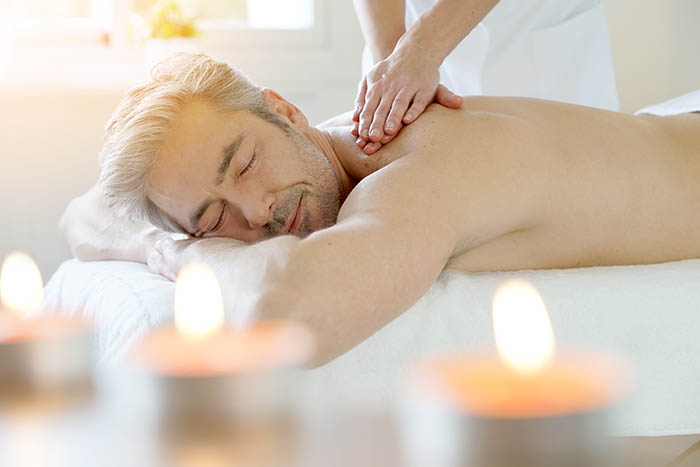
A successful massage session implies complete relaxation by the customer, while the licensed therapist goes to work on sore muscles and strained areas. However, a massage session can be greatly improved with a few simple tricks, such as candles and low lighting.
The possibilities are essentially limitless and left to the creativity of the person or company. Aromatherapy is an excellent way to experience further relaxation, not to mention the wonderful scent.
Another great element is music, which can be used as a background during a massage. Having a comfortable robe and bed to rest on is also an important factor to consider, especially if the massage session is more than half an hour.
You’re also able to chip in and suggest certain tweaks to your massage therapy if you know what will help you relax one hundred percent.
Moreover, any questions you may have about the session should be addressed before you book the massage in order to prevent misunderstandings and embarrassing moments.
Conclusion
A massage session can be a worthwhile break, especially if stress has kept you from enjoying your life. Managing stress, with a variety of methods, is an effective way to maintain your health in a good state.
Furthermore, experiencing half an hour or an hour of you-time is essential in today’s hectic and fast-paced world. Though you may love the massages your partner gives to you out of love, or sheer pestering, there’s nothing like a massage from someone who’s an actual professional.
Many people feel calmer after a session. If stress overwhelms you or affects your health, talk with a health care provider, since massage is a complement to care, not a replacement.
Sources
- Massage Therapy: What You Need To Know, NCCIH
- Stress and your health, MedlinePlus

” Helen Heiz ”
Helen Heiz is a massage therapist and instructor at Dave Taylor Training who has been practicing different massage techniques and teaching them for more than 15 years now.She has learned diverse type of massages in the past years leaving her not only pain free but willing to learn even more to teach and help others.