Understanding Acne: Learn About The Types & Treatments
Contents
If you’re struggling to achieve clear skin you might be wondering if you are facing acne. This skin disorder can wreak havoc on your face and even leave you with scars. In fact, acne affects up to 50 million Americans each year, according to the American Academy of Dermatology.
Follow this comprehensive guide to learn more about acne and find the treatments that are right for you.
What Is Acne?
Acne is a skin disease that mainly affects your skin’s oil glands. On your skin, you’ll find small holes called pores. These pores connect to your oil glands found below your skin’s surface. Your glands contain an oily material that is referred to as sebum.
The pores are connected to the glands by a canal that is called the follicle. The sebum carries dead skin cells up to the surface of your skin.
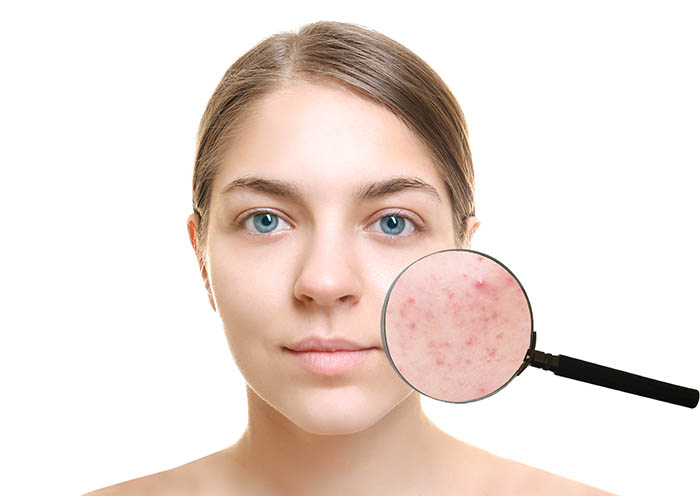
When the follicle clogs, a pimple will form on your face. Acne is the chronic breakout of pimples that are caused by this condition. They will occur on your face and can also be found on your neck, back, chest and shoulders.
Different Forms Of Pimples
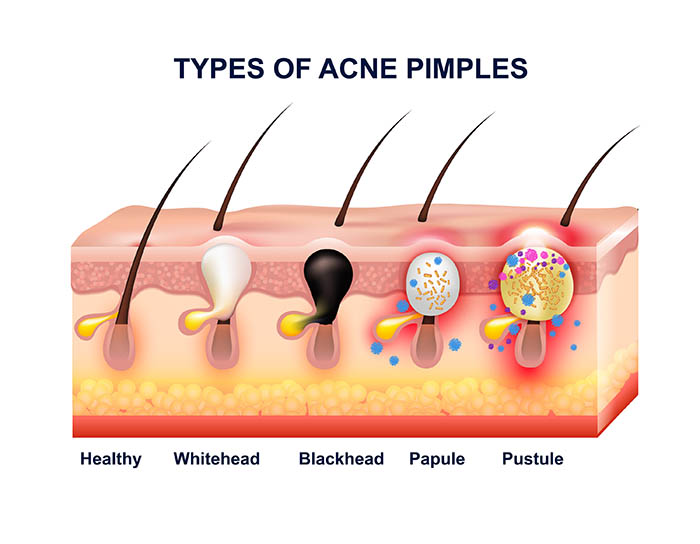
Blackheads and whiteheads are the most common acne lesions. Acne can also cause papules, pustules (pimples), and deeper nodules, according to the NIAMS.
Blackheads
Refer to the dark acne lesions of the face. They appear dark because they contain oxidized melanin which is a pigment made by the skin cells. Blackheads are fully extractable and usually rise above the surface of the skin.
Whiteheads
On the other hand, are white or yellowish in color. They are not extractable by squeezing and usually measure 1-3 millimeters in diameter. Whiteheads tend to stay under the surface of the skin. Both whiteheads and blackheads can occur with acne.
Nodular Acne
Another, lesser known type of acne is Nodular acne. This will appear over large areas of your skin like the back or chest and tends to be quite painful.
They actually occur as lesions that are lodged down deep in the skin. They are a lot like cysts but they are not filled with pus.
These occur when you have whiteheads or blackheads and the contents of them spill over into your surrounding skin. The pain and irritation can continue for weeks and sometimes even months. If nodular acne is not dealt with, it can lead to scarring, so see a dermatologist.
Causes Of Acne
Acne is linked to hormones and clogged pores. Factors that can trigger or worsen it include:
-
Hormonal Changes – particularly in teenage years and pregnancy
-
Heredity
-
Oily makeup or skin products
-
Hormone-containing medicines
-
Other medicines, such as corticosteroids and lithium
-
Dead Skin Cells
-
Bacteria
-
Stress (it can make acne worse)
More About Stress
Stress can make acne worse, so try to limit it as much as possible. Find ways to daily relax and release all your worries.
Some people find comfort in yoga or meditation while others enjoy physical exercise to keep the stress at bay. Whatever works for you, whether a warm bubble bath or dancing to your favorite music, make time to enjoy it regularly so your skin can remain clear.
Pores & How To Keep Them Clean
Prevention is the best way to treat acne and that starts with healthy and clean pores. As a reminder, pores are the small openings in your skin that are connected to your oil glands. Keeping your pores clean is priority number one when trying to combat acne.
Steaming
Steaming out the pores is one of the most popular ways of keeping the face clean. It’s an easy method to do and you have everything you need at your house.
Simply take a pot of water, fill it with water and heat it up on the stove.
Once the water is hot, remove it from the stove and place a towel over your head while leaning your body over the pot.
To maximize the benefits, you’ll want to do this for about 10-15 minutes at a time.
Ideally, performing this task twice weekly would bring you the best results. Keep your face a safe distance from the water to avoid burns, and skip steaming if it irritates your skin.
Pore Cleansing Strips
There are different varieties of Pore Cleansing Strips on the market that boast the ability to keep the pores clean. They contain a bonding material that acts like a glue and removes dirt deep in the pores.
Extraction
If you want a deep cleaning of the pores, you could see a professional. During a facial, they’ll likely use a set of metal tools to manually clean out your pores from dirt and oil.
At home, don’t squeeze or pick at blemishes. That can cause scars or dark blotches, according to the NIAMS.
Treatment Of Acne
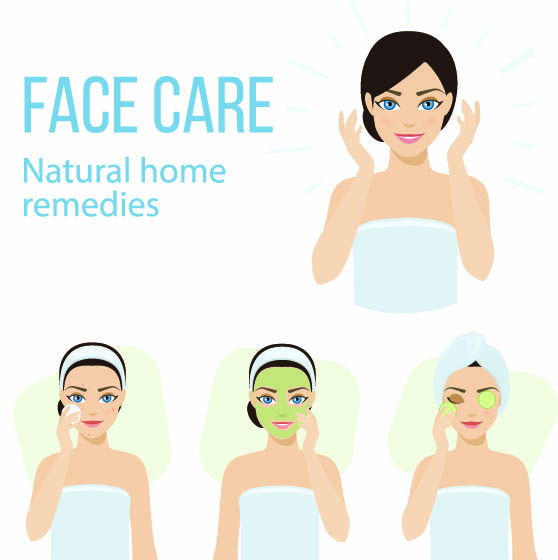
There are many different ways to treat your acne once your face has broken out. Many people find a method that works extremely well and they stick to using that. Others need to continue experimenting until they are able to find something that works.
Natural Treatments
In an effort to live more natural lives, people are ditching chemicals and medications for products that only use natural ingredients. The thought is that the natural ingredients won’t irritate the skin and produce better results in the long-run. Keep in mind that “natural” does not always mean gentler, and some natural ingredients can irritate the skin.
Among other well-known natural remedies for acne treatment is tea tree oil. Some small studies suggest tea tree oil products may help mild acne, though the evidence is limited. Another option is goat milk. Unscented goat milk soaps, for instance, contain lactic acid, a gentle exfoliant that can help remove dead skin cells.
Home Remedies
Much like the natural treatments, if you’re looking for control over the products that are going on your face and you don’t want to buy dedicated skin formulas, there are plenty of products you have around the house that might work.
Raw honey makes a fabulous skin scrub that can be used a few times per week. You may also want to consider using this as a mask for gentle cleaning.
A clay mud mask will work in conjunction with your gentle cleansing as a healing mask when used once per week.
If you find yourself wanting to use a toner, mix 2/3c of water with 1/3c raw apple cider vinegar. Vinegar is acidic and can sting or irritate skin, so test it on a small area first and stop if it burns.
Some other less-known home remedies include tea tree, aloe vera, willow bark extract, and green tea extract.
Vitamins
Many believe that your diet and value of nutrients inside your body contribute greatly to the health of your skin.
While eating healthy is important, we can’t always get the vitamins and minerals we need from diet alone. There are plenty of quality supplements on the market today, but there is little evidence that vitamin pills clear acne.
Vitamin A is the vitamin most tied to acne treatment, but through prescription retinoids, which are vitamin A derivatives, not over-the-counter pills.
Don’t take high-dose vitamin A supplements for acne. Regularly taking more than 33,000 IU a day can cause vitamin A poisoning in adults, and large doses in pregnancy can cause birth defects, according to MedlinePlus.
Vitamin C helps your body make collagen, and vitamin E is common in lotions for dry skin. Claims that vitamin B complex evens skin tone or that vitamin K clears dark circles are not well supported.
A balanced diet covers most people’s needs, so ask your doctor before adding supplements.
Over-the-Counter Treatments
You can find a variety of over-the-counter treatments for your acne at the local drugstore. Choose from treatment kits, lotions, cleansers, leave on products and more, but most of them include the same basic ingredients.
Benzoyl Peroxide is one of the most popular ingredients used because it removes excess oil from your skin and even removes those pesky dead skin cells.
You’ll find strengths of 2.5-10 percent and it does come with some potential side effects such as dry skin, redness, burning and more.
Salicylic Acid keeps pores from becoming clogged and is available in over-the-counter strengths of 0.5-2 percent. Side effects can include stinging and skin irritation.
Sulfur removes the dead skin cells and removes oil from the pores. It generally is found with other ingredients and can potentially dry out the skin. Keep in mind that products which contain sulfur may also come with an unusual odor.
Alpha Hydroxy Acids are derived from sugar-containing fruits and remove dead skin cells while reducing inflammation.
They may help skin look smoother and can improve the look of mild acne marks.
Prescription Medications
Sometimes nothing seems to work and you’ll want to visit your dermatologist. There are several different options they might lead you to. For example, if you’re a woman, they might direct you to go on a low-dose birth control to enable more balanced hormones through the use of estrogen.
If they feel that your acne is caused by bacteria, they may prescribe an antibiotic such as clindamycin or doxycycline. There are also topical retinoid drugs they can prescribe that you can apply after cleansing.
Androgen blockers can also be prescribed in an effort to reduce the amount of oil that is made in the pores. For severe or scarring acne, a dermatologist may prescribe isotretinoin, a strong oral medicine. It can cause serious birth defects, so it requires strict pregnancy prevention.
Prescription medicines can have more side effects, so follow your dermatologist’s instructions closely.
Conclusion
It’s good to know that we aren’t alone in this struggle to have clearer skin! It can be a daily battle to find the products and routine that work for you, but it will be worth it in the end.
Whether you choose to use an all-natural route or you feel that a trip to the dermatologist is your best course of action, you can feel empowered knowing that you are taking charge of your skin’s health.
Sources
- Skin conditions by the numbers, American Academy of Dermatology
- Acne, National Institute of Arthritis and Musculoskeletal and Skin Diseases
- Acne: Diagnosis, Treatment, and Steps to Take, National Institute of Arthritis and Musculoskeletal and Skin Diseases
- Hypervitaminosis A, MedlinePlus