Best Probiotics For Children: Healthy, Happy Children!
Contents
Probiotics are live microorganisms, such as certain bacteria and yeasts, that may benefit health. Similar microbes live naturally in your body, and probiotics are also found in foods like yogurt and in supplements.
Most of us think of bacteria as a disease causing micro-organism, however, this is not true of all bacteria. There are in fact plenty of ‘friendly bacteria’, and the microbes living in our gut play a role in digestion and health.
Research on probiotics in children is still developing. Some strains have been studied for problems like diarrhea, colic and constipation, and some studies have looked at whether they help with eczema, with mixed results. According to the NIH’s NCCIH, we still don’t know in most cases which probiotics help and which don’t. If you want to try the best probiotics, choose with your pediatrician.
Constipation, reflux and colic are among the most common gastro intestine complications in young children, and probiotics are not a proven fix for them. See your pediatrician about ongoing tummy troubles.
Why Do Kids Need Probiotics?
Probiotics are generally safe for healthy children, but there are a few things to take into consideration before giving your child probiotics.
First off, talk with your pediatrician before giving your child a probiotic. Risks are higher for children who are seriously ill or have weak immune systems.
Do not give probiotics to a premature baby unless their medical team directs it. In 2023, the FDA warned that premature infants given probiotics are at risk of severe, potentially fatal infections.
So now that you’ve seen your pediatrician and they’ve given you the ‘green light’, we can look at some of the top-rated probiotics on the market.
One of the better-studied uses is during antibiotic treatment.
Some probiotics may lower the chance of antibiotic-associated diarrhea by supporting the ‘good bacteria‘ in your child’s gut. Ask your pediatrician which product and timing to use.
The Best Probiotics for Children
Hyperbiotics PRO-15 Probiotics
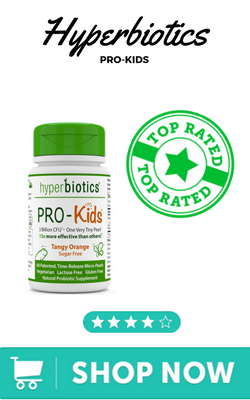
We’ll start with Hyperbiotics Pro-15, a popular probiotic. It comes in small time-release ‘pearls’ that the maker says protect the bacteria from stomach acid.
The pearls are small, which can make them easier to swallow than capsules. Check the label for the age the product is meant for.
The company’s effectiveness claims for the pearl form haven’t been confirmed by independent research, and no probiotic is proven to boost a child’s mood or energy.
Culturelle Kids Packets Daily Probiotic Supplement
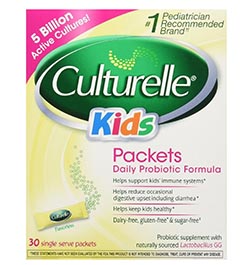
Culturelle Kids packets contain Lactobacillus rhamnosus GG, one of the most studied probiotic strains in children.
It is marketed for occasional digestive upset and diarrhea. Diarrhea in children has many causes, so call your pediatrician if it lasts or your child shows signs of dehydration.
The packets mix into cool food or drinks.
Renew Life Ultimate Flora Kids Probiotic Chewable Tablets
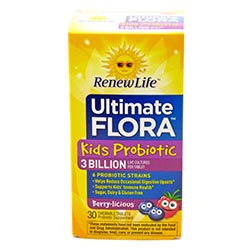
The renew life Ultimate Flora kids Probiotic chewable tablets are not only good for your child, they also taste great.
The probiotics have no artificial sweeteners or sugar but have a berry-like taste.
They’re naturally sweetened with xylitol, which is far better for the teeth.
The maker says they contain no artificial flavors, preservatives or colors. Keep xylitol products away from dogs, as xylitol is toxic to them.
I should also mention that these probiotics contain no dairy or soy.
Udo’s Choice Infant’s Blend Probiotic
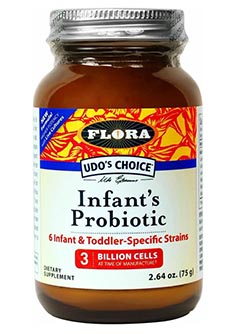
Udo’s choice infant’s blend probiotics come in the form of a powder.
The powder can be mixed into a child’s food or drink, which some parents find easier than chewables. For an infant, check with your pediatrician before adding anything to formula or breast milk.
ProBiota Infant Powder
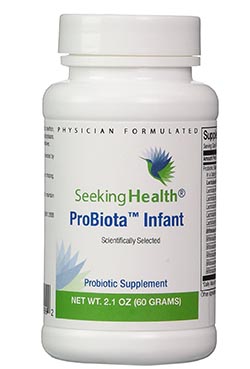
This is another powdered probiotic for young children.
Probiota infant powder doesn’t contain any soya, milk, fish or eggs. It can be administered to your child directly without adding it to any formula or juice.
There isn’t solid evidence that this or any probiotic prevents allergies or skin conditions. As with the others, ask your pediatrician first, especially for a baby.
If you’re looking for an amazing probiotic, then why not give one of the products mentioned above a go?
Probiotics are dietary supplements, which don’t need FDA approval before they are sold. Quality and the strains inside vary, so read labels carefully.
Talk with your pediatrician first, give only the dose on the label, and stop and call the doctor if your child gets a fever, worsening symptoms or seems unwell. A varied diet with foods like yogurt is a good place to start.
Sources
- Probiotics: Usefulness and Safety, National Center for Complementary and Integrative Health (NIH)