Nizoral: Hair Loss Treatment, The Complete Guide
Contents
Hair loss is something that affects both men and women. One hair-loss group estimates that, in the US alone, 35 million men and 21 million women are experiencing it.
If you’ve noticed your hair is looking a little on thin side, you may be wondering what you can do about it, without having to resort to expensive surgical routines.
Nizoral is a common anti-dandruff shampoo. Some small studies suggest its active ingredient may also help with pattern hair loss.
The evidence is limited, though, and it is not an FDA-approved hair loss treatment. It won’t reverse a receding hairline on its own.
So what does the research show, and how should you use it?
Read on to find out.
What Is Nizoral?
Nizoral is a medicated shampoo for dandruff, the flaking and itching caused largely by yeast on the scalp.
The active ingredient is ketoconazole, an antifungal. The over-the-counter version is 1%; a 2% strength needs a prescription in the US.
It’s effective at reducing itching and flaking. Follow the label for how often to use it.
The neutral fragrance makes it usable by both men and women.
What Causes Hair Loss?
Your genes play the biggest part in the most common type of hair loss, pattern hair loss.
However, there are some external factors that may speed up what genetics has in store for you.
Low vitamin levels, anaemia, protein deficiency and thyroid problems may be contributing to your problem. In some cases, poor hair hygiene and management may be the culprit.
Changing hormone levels may also play a part. This can be particularly true in pregnant women.
Knowing the cause of hair loss is the key to the right treatment, so see a dermatologist for a diagnosis.
For pattern hair loss, the proven options are minoxidil and, for men, finasteride, which the FDA approved for male pattern hair loss. Some people add a shampoo like Nizoral alongside them for hair loss.
How Nizoral Shampoo Works For Hair Loss
Dandruff itself doesn’t usually cause hair loss, but scalp inflammation and scratching can make hair look worse.
Researchers think ketoconazole may also reduce inflammation around the follicle and have a mild anti-androgen effect.
A 2020 systematic review found five small human studies (318 people) reporting thicker hair shafts with topical ketoconazole. The authors called it promising as an add-on but said randomized trials are needed.
So it may help stimulate hair growth a little, but don’t expect it to work like minoxidil or finasteride.
Nizoral Shampoo
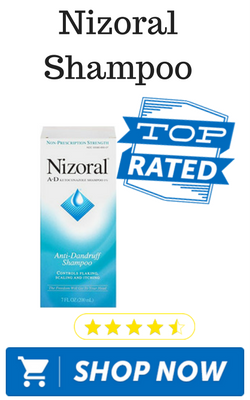
Nizoral is a common anti-dandruff shampoo and is easy to find.
Use it as the label directs. Stop and talk to a doctor if your scalp gets irritated, or if you notice unusual hair texture changes or more shedding.
Using Nizoral as directed keeps dandruff in check, and it may modestly support growth of your hair. If you need to wash more often, use your regular shampoo for in-between washes.
The best thing about Nizoral is that it does not require any tricky application. As long as you know how to wash your hair, you can use Nizoral! You won’t even feel like you are using any special treatment as Nizoral lathers like ordinary shampoo and won’t leave you with a chemical-scented head.
However, if you suffer from dry hair, you will probably want to make sure you use a conditioner on the days that you wash with Nizoral to keep your hair shiny and soft.
Nizoral can be an easy add-on to your weekly routine, especially if you also have dandruff.
In Conclusion
Nizoral treats dandruff well, and early studies suggest ketoconazole may modestly help pattern hair loss. It is not a proven stand-alone treatment.
If you’re losing hair, see a dermatologist to find the cause and discuss proven options like minoxidil or finasteride.
Sources
- Hair loss: Diagnosis and treatment, American Academy of Dermatology
- Topical ketoconazole for the treatment of androgenetic alopecia: A systematic review, Dermatologic Therapy (PubMed)