Alkaline Water Filters vs. Charcoal, Sediment and Iron Filters

Contents
- The Method: Alkaline Water Filter
- Specifically
- Pros and Cons
- In Summary
- The Method: Charcoal Water Filter
- Pros and Cons
- In Summary
- The Method: Iron Water Filter
- Pros and Cons
- In Summary
- The Method: Sediment Water Filter
- Specifically
- Pros and Cons
- In Summary
- The Method: Chlorine Water Filter
- Specifically
- Pros and Cons
- In Summary
- Sources
Safe drinking water matters, and the right filter depends on what's actually in your water.
If you’ve tested your water or had it tested by a professional, and have found it to be less than desirable, you’re not alone.
If your drinking water comes from the ground and has been contaminated with too much iron or sediment, you’re one of many.
Even if you’re just feeling as if you could improve the water running from your tap, you’re one of a large number of growing households searching for better water quality.
A report covered by the New York Times found that in 2015, 77 million Americans were served by water systems with some kind of safety violation.
The CDC advises that you test your water first, then pick a filter certified (look for NSF on the label) to remove the specific contaminants you're worried about. If you have a private well, test it at least once a year.
Filters are so streamlined now that you can choose to remove only specifically what you need to and be left with what you ultimately want to bring to your family. You're after great tasting, clean water to drink, bathe in, and clean with.
I’ve narrowed it to 5 filters that do very specific jobs: an alkaline pitcher, a charcoal filter bottle, an iron filter, a sediment filter and a chlorine-reducing faucet filter.
There are a variety of ways to remove undesirables. I’ve included in my list a couple of smaller options and a few larger ones. Read on!
The Method: Alkaline Water Filter
Alkaline filters add minerals that raise the pH of water. Many people like the taste, but the health claims don't hold up well.
You may have read about the Okinawa Centenarian Project. Researchers credit Okinawans' long lives mainly to diet and lifestyle, not to alkaline water.
Claims that alkaline water aids weight loss, kidney function or bone health lack good evidence. Your kidneys and lungs keep blood pH in a tight range, and a systematic review found no support for promoting alkaline water to prevent or treat cancer. People with kidney disease should ask their doctor before using mineral-adding filters.
Specifically
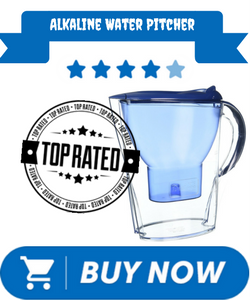
The best alkaline water filter for your household, and probably the easiest to use, is The Alkaline Water Pitcher by Lake Industries. At 2.5 L, it’s a nice size for your family to get the benefits that alkaline water can provide on a consistent basis.
There's no expensive installation or confusing directions. It's a simple pitcher with a multi-stage cartridge that the maker says reduces odors, chlorine and heavy metals. Check for NSF certification for any specific contaminant, such as lead, before relying on it.
The pitcher is made of BPA free food grade plastic and will eliminate the need for plastic bottles. You’re doing not only your body but also the environment a good turn!
Pros and Cons
Some pros to this type of filter are that it’s easy to set up, and fits nicely in your fridge or on your countertop. The use of the filter isn’t confusing and even a child can refill the pitcher.
A pitcher is a low-cost way to improve taste. Like most pitcher filters, it is not designed to remove germs. A con is that it only filters a small amount at a time.
In Summary
Easy to use is right up my alley! If you like the taste of alkaline water, this pitcher is a simple way to try it. Just don't expect health benefits beyond drinking enough water.
There’s no installation, and you can keep filling it for a steady supply. Replace the cartridge on the maker's schedule.
The Method: Charcoal Water Filter
A charcoal water filter is a great way to remove contaminants from your water without removing the beneficial minerals in the process.
Activated charcoal is typically used in filters. This is charcoal that has been processed so that it becomes even more porous.
The more porous charcoal is, the better its ability to trap impurities and hold them for a long time before needing to be replaced with a fresh piece of activated charcoal.
Pros and Cons
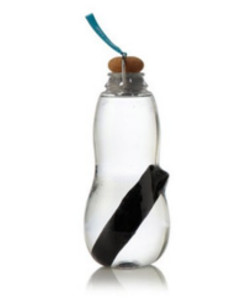
The Black+Blum Eau Good Charcoal Filter Bottle is a great, portable choice!
One pro I discovered right away with this bottle is that it has a nice wide mouth; no squirt bottles for me, please!
Be aware that sometimes a bit of charcoal may break off into the water, which some users find unpleasant. Rinse the filter well before first use, as the maker directs.
A con for this product is that, while it's very convenient to take with you, it doesn’t fit many standard cup holders.
In Summary
This is definitely a product I’ll be giving as gifts to my fitness friends who want to improve water quality without investing a lot of time, effort and money.
This bottle uses a piece of activated charcoal to improve the taste of tap water. It's an easy option for treated city water, but it isn't designed to make untreated water from lakes or streams safe.
The Method: Iron Water Filter
Sure, we all need some iron in our diet, but an overload of iron in our water is a big problem.
Too much iron in your water mostly causes a metallic taste and orange-brown stains on clothes, sinks and appliances – yuck!
An iron filter is a great way of getting the iron content reduced so that your drinking water tastes better.
Pros and Cons
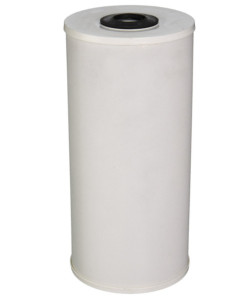
This is an exceptionally well-made iron filter and will do far more than a simple tap hook up system would.
It fits a whole-house filter housing, so it treats the water you wash with as well as the water you drink. It can be used alongside other filters. Have your water tested so you know how much iron you're dealing with, since heavy iron may need a different system.
A con is that it’s not as simple as, for example, a pitcher. Since this is a cartridge that fits into the Big Blue housing, it does require the purchase of other components to use it.
In Summary
This cartridge is a solid choice if you want an iron filter for a Big Blue housing. Pentek is a well-known name in water filtration.
Refill cartridges are easily ordered so you don’t have to worry when one has finally given up the ghost.
The housing has an easy to use opening so replacing these filters is a breeze.
The Method: Sediment Water Filter
Imagine taking that first long drink of cold, fresh water, and suddenly you feel it… something has made its way into your mouth! Gross!
This is what’s known as sediment, and it can be a big problem in some households. Sediment can wreak havoc in household appliances like your washer. It can even, over time, clog your drains as you run the taps.
It’ll get left behind in the tub after your bath and just generally be a nuisance.
If you’re noticing any of the above, it may be time to invest in a sediment filter.
Specifically

Pentek hits another home run with their DGD-5005 Spun Polypropylene Filter Cartridge. Just like the iron filter, this fits into the Big Blue housing, which also can be used in conjunction with a whole house filtration system.
This filter will reduce rust, silt, scale and sand in your water system. It combines different layers to maximize its ability to grab, hold, and lock in any undesirables from reaching your household water supply.
Pros and Cons
With 2 separate gradient layers, this filter catches far more than your average filter. It leaves far less room for even the tiniest bits of sand or silt to slip through.
A sediment filter only catches particles. It doesn't remove germs or dissolved chemicals.
A con would be similar to that of its iron filter cousin, in that it requires housing and more set up than, say, a simple charcoal filter.
In Summary
Another Pentek product, and once again I’d highly recommend this type of filter for your whole house filtration protection. It’s a well made product and Pentek has done its homework in providing you with the best of what technology has to offer.
They keep in mind that you, the homeowner, have a busy week and don’t have time to mess about trying to get a system set up and running. Easy, simple instructions and thoughtful housings with easy filter changes make this one a winner.
The Method: Chlorine Water Filter
Chlorine is added to public water to kill germs, and it's a big reason tap water is safe to drink. Some people dislike the taste and smell, which is where a chlorine filter helps.
Chlorine can react with organic matter in water to form byproducts such as trihalomethanes. Public water systems in the U.S. must keep these below federal limits. A carbon filter certified for chlorine taste and odor can reduce chlorine at the tap.
Specifically
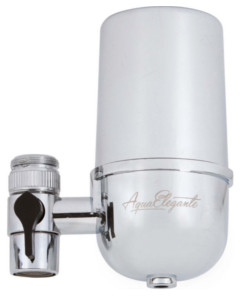
One option is the Advanced Tap Water Faucet Filter, by Aqua Elegante.
An easy to install device, this one also looks sharp and won’t stand out like a sore thumb against your bathroom or kitchen décor.
The maker rates each filter for about 200 gallons. It twists onto most standard faucets, and a switch lets you choose filtered or unfiltered water.
Pros and Cons
A big pro of this filter is the ease of set up and the fact that it takes up no other space in the house – neither in the fridge, on the counter, or in the basement as a large set up would do.
The maker says the filter also reduces sediment, mercury and lead. Check the product's NSF certifications to confirm which contaminants it's tested for.
A con is that for each tap to run good clean water, multiple filters must be purchased.
In Summary
It has a sleek design that blends into most kitchens, and installation is easy. Replace the cartridge on schedule, since an old filter stops working well.